


Nashville vs Charlotte Comparison: Strategic Economic Profiles for 2026


The southern United States is experiencing a historic transformation, with Nashville and Charlotte emerging as the two most significant engines of regional prosperity. As we navigate 2026, both cities have evolved beyond their historical identities to become multifaceted hubs of commerce, technology, and population growth. Comparing these two urban giants requires a nuanced look at their unique industrial foundations, demographic shifts, and the infrastructure projects currently shaping their future. For investors, business owners, and families, the choice between these cities often hinges on whether they prioritize the innovationheavy, creative energy of Nashville or the corporate, financedriven stability of Charlotte.
The Demographic Landscape
Charlotte and Nashville share a common narrative of rapid expansion, but the catalysts for their demographic shifts differ. Charlotte has long served as a financial anchor, attracting a steady stream of highly educated professionals to its corporate headquarters. Its population growth is characterized by a mature influx of careeroriented individuals who find comfort in the stability of a city with deep institutional roots. Nashville, conversely, has built its reputation on a more dynamic, creative, and techintegrated growth model. The city attracts a younger, mobile workforce drawn to its cultural vibrancy and its emergence as a tech sector leader.
Analyzing the population growth of these hubs requires context from the broader economic analysis of the southeastern United States. While Charlotte draws heavily from the Northeast, Nashville has seen significant migration from the West Coast, particularly from techsaturated markets seeking a lower cost of living and a businessfriendly tax environment. The following data outlines the demographic divergence between these two regions.
|
Demographic Metric |
Charlotte MSA |
Nashville MSA |
Primary Difference |
|
Population Growth 20242026 |
2.3 percent |
2.5 percent |
Nashville shows higher velocity |
|
Median Age |
35.8 years |
34.2 years |
Nashville skews younger |
|
Bachelor's degree Attainment |
38 percent |
41 percent |
Nashville leads in education index |
|
Net Domestic Migration |
High |
Very High |
Nashville attracting tech talent |
|
International Migration |
Moderate |
Moderate |
Both cities are stable |
As residents plan their moves, many use a relocation cost calculator to determine the feasibility of relocating to either city. The shift in population density is creating new suburban rings in both areas, where the demand for residential property is increasingly balanced by the need for commercial and retail development.

Industrial Engines of Growth
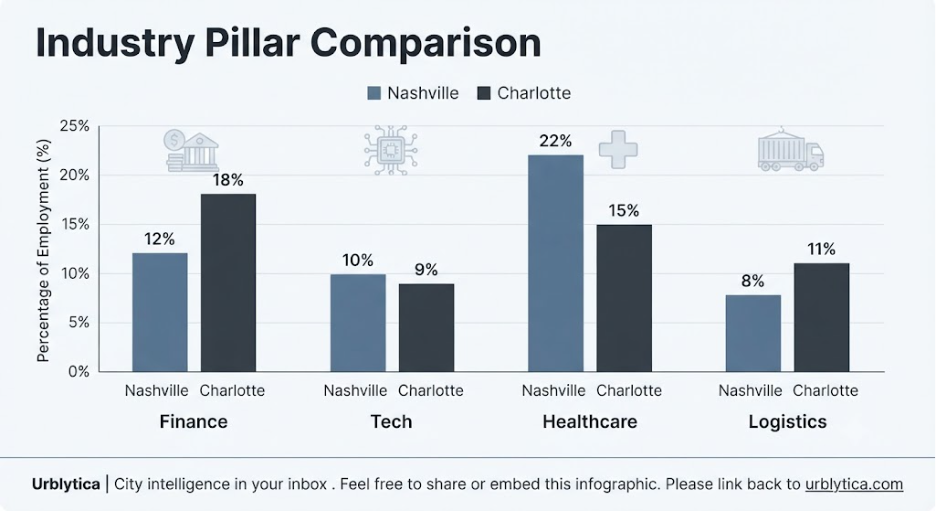
The economic bedrock of Charlotte is rooted in its status as a banking and logistics powerhouse. As a hub for major financial institutions, the city supports a sophisticated ecosystem of professional services, including legal, accounting, and consulting firms. For entrepreneurs who want to start a business in a market with established corporate clients, Charlotte offers a clear, predictable environment. The city has effectively leveraged its financial core to support secondary industries such as energy and manufacturing, providing a buffer against the volatility of any single sector.
Nashville operates with a distinct industrial focus. Its economy is anchored by healthcare management, research, and a unique creative sector that extends beyond its musical heritage. The city has become a destination for companies that value innovation, as seen in the rapid expansion of healthtech startups. Businesses that prioritize agility often find that they can buy a business in Nashville that is already optimized for a highgrowth tech environment. This divergence is evident in the sectoral contribution to the regional gross domestic product.
|
Industry Sector |
Charlotte Contribution |
Nashville Contribution |
Growth Driver |
|
Finance and Banking |
30 percent |
12 percent |
Corporate HQ density |
|
Healthcare and Tech |
15 percent |
28 percent |
Innovation ecosystem |
|
Logistics and Export |
18 percent |
14 percent |
Strategic location |
|
Creative and Hospitality |
12 percent |
20 percent |
Tourism and brand power |
|
Professional Services |
15 percent |
16 percent |
Enterprise demand |
For firms looking to optimize their operational overhead, it is standard practice to subscription analyzer spending to ensure they are not overpaying digital tools in an increasingly competitive market. Both cities offer a probusiness regulatory environment that favors longterm capital stability, making them excellent choices for corporate expansion.
Cost of Living and Housing Dynamics
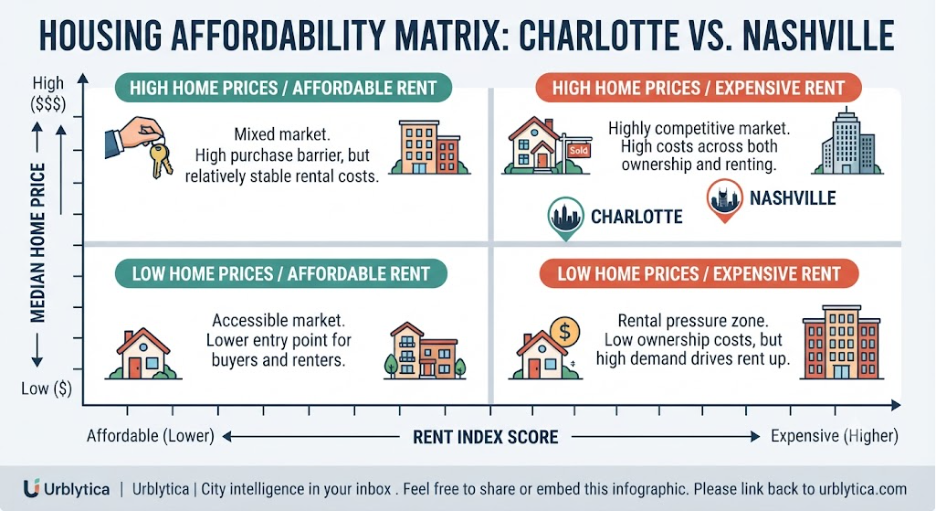
The cost of living in both cities remains a primary concern for new residents. Charlotte has historically maintained a slightly more balanced housing market due to its geographic ability to expand outward in most directions. This has allowed for a diverse range of housing options, from urban apartments to sprawling suburban neighborhoods. Nashville has faced steeper appreciation due to geographic constraints and the intense demand for central urban core living. When comparing these markets, it is helpful for families to use a cost of living calculator to assess their financial footprint.
For those navigating the complexities of rent versus buy decisions, the rent vs buy analysis often reveals that while Charlotte may offer more square footage per dollar, Nashville offers potential equity growth in highdemand urban sectors. Both cities are experiencing a trend where housing development is becoming more vertical, reflecting a shift toward highdensity living to accommodate the rapid population growth.
The senior care landscape also differs, with both cities investing heavily in infrastructure to support an aging demographic. Families managing these transitions often seek senior care resources to ensure they have adequate support systems, whether they are in Charlotte or Nashville. The availability of assisted living facilities is a key indicator of a city's commitment to quality of life for its senior population.
Infrastructure and Regional Connectivity
Infrastructure serves as the circulatory system for both metropolitan areas. Charlotte has focused its efforts on its position as an aviation hub. The expansion of its airport and the development of transit corridors remain the highest priority for the municipal government. For project managers and logistical experts, ensuring the accuracy of data in this fastgrowing market is essential. Many firms now use a bulk address cleaner to maintain the integrity of their distribution databases, which is vital when serving the sprawling suburbs of Queen City.
Nashville has prioritized its regional connectivity, focusing on the expansion of its highway systems and the development of a transit model that links its outlying areas to the urban center. The city has made significant strides in integrating technology into its transit planning, which has helped to alleviate some of the congestion caused by its rapid expansion. For project leads who need to manage multiple workstreams, tools like time blocker have become indispensable for ensuring that infrastructure projects remain on schedule.
Digital infrastructure is another arena where both cities compete. Highspeed fiber coverage is nearly ubiquitous in both downtown cores, supporting the growth of techheavy firms. As companies evaluate their corporate site selection data, they look for regions that can provide redundant power grids and fiberoptic stability, both of which are readily available in both Nashville and Charlotte.
Business Environment and Incorporation
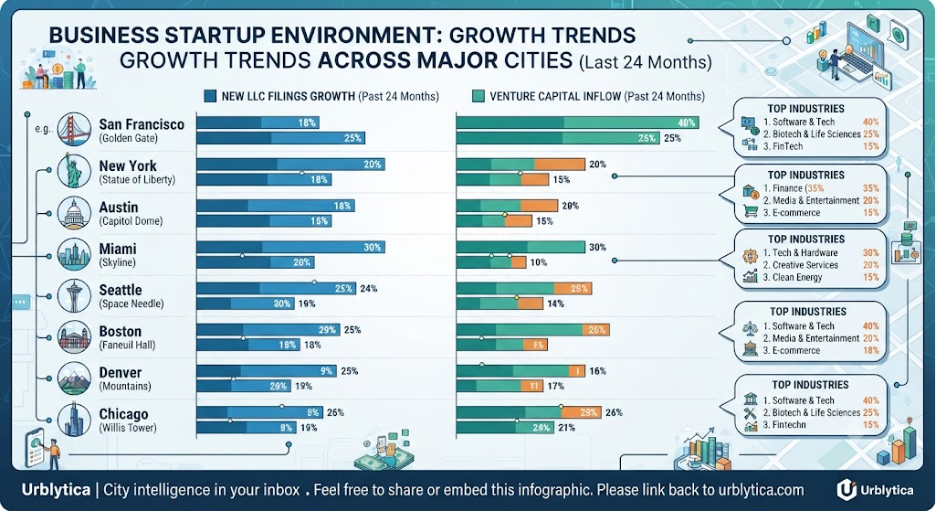
The regulatory climate in North Carolina and Tennessee is exceptionally friendly to new enterprises. The lack of individual income tax in both states provides a significant advantage for employees and business owners alike. When preparing to business formation of a new entity, founders find that the procedural steps in both Charlotte and Nashville are highly efficient. You can incorporate online to save time and reduce errors in your registration documents. However, the networking culture in the two cities varies. Charlotte businesses often rely on the strength of their corporate partnerships, while Nashville startups frequently engage with venture capital and angel networks that support highgrowth potential.
For those planning to expand their footprint, access to local market intelligence data is crucial for selecting the right site. Whether you are looking to enter the accounting and finances sector or launch a venture in home services franchises, the market environment in both cities is conducive to success. Entrepreneurs are encouraged to use business guides early in their planning process to avoid common administrative pitfalls.
|
Business Indicator |
Charlotte Value |
Nashville Value |
Outlook |
|
Startup Success Rate |
86 percent |
84 percent |
High |
|
Venture Capital Availability |
Moderate |
High |
Positive |
|
Ease of Incorporation |
Very High |
Very High |
Stable |
|
Professional Services Supply |
High |
Moderate |
Competitive |
|
Tax Burden Index |
Low |
Low |
Favorable |
For founders who are looking to sell, there is also a vibrant market of entities ready for acquisition. Individuals looking to business for sale often find that Charlotte offers more established, legacytype opportunities, whereas Nashville provides a higher concentration of techfocused ventures with rapid scaling potential.
Healthcare and Aging Populations
As the population matures, both cities are evolving into regional healthcare hubs. Nashville concentration of healthcare management and clinical research makes it a premier destination for those seeking specialized medical treatment. This creates a high demand for health and senior care services that integrate with advanced medical networks.
Charlotte is following a similar trajectory, with major health systems expanding their footprint to meet the needs of a growing population. For families looking to navigate the aging process, resources such as elder law advice have become increasingly accessible. The transition to transitioning to assisted living is a critical life event, and both cities have developed robust networks to manage this process. Families who need to find senior care can access extensive directories to ensure their loved ones receive the level of care they require.
The growing senior population also impacts the demand for memory care and longterm care, requiring ongoing investment from the public and private sectors. As both cities continue to grow, the availability of these support services will remain a vital component of their attractiveness to new residents.
Strategic Outlook 2026 and Beyond
The competition between Nashville and Charlotte is expected to intensify through 2026. Nashville is refining its identity as a tech and healthcare nexus, while Charlotte is doubling down on its financial and logistical dominance. For residents and investors, the choice is not about finding the superior city, but rather about identifying which environment aligns best with their personal or corporate goals.
The data suggests that both regions will remain the primary drivers of the southern economy. By maintaining a probusiness regulatory framework, investing in human capital, and managing the inevitable challenges of growth, both Nashville and Charlotte are wellpositioned to maintain their status as the fastestgrowing hubs in the country.
Frequently Asked Questions
1. Which city is better for financial services careers?
Charlotte is widely recognized as a premier destination for financial services, housing several major banking headquarters and a massive network of support services.
2. Does Nashville have a stronger tech sector?
Nashville is increasingly seen as a leader in healthcare technology and general tech innovation, attracting significant venture capital and a younger, mobile workforce.
3. How does the cost of living compare?
While both cities are more affordable than major coastal markets, Nashville has seen more dramatic housing appreciation recently, whereas Charlotte offers a slightly more elastic market.
4. Are both cities friendly to startups?
Yes, both regions have excellent business environments, but Nashville often attracts agile, techfocused startups, while Charlotte is a hub for more corporate and enterpriseservice businesses.
5. How do these cities support the aging population?
Both cities have robust healthcare sectors. Nashville is particularly strong in medical research and specialized health management, while Charlotte is expanding its general hospital and assisted living capacity.
6. What infrastructure challenges are these cities facing?
Both cities are tackling congestion. Charlotte is focused on airport and transit expansion, while Nashville is working on highway capacity and regional connectivity.
7. Which city has a better tax climate?
Both benefit from statelevel policies that exclude individual income tax, providing a significant competitive advantage for employees and businesses in both regions.
8. Where can I find data on business viability in these cities?
You can access extensive economic analysis and market profiles for both Charlotte and Nashville through regional business research tools.
9. Is it easier to buy a business in one of these cities?
Both have active markets for business acquisitions. Your choice should depend on the industry; Charlotte is better for stable corporate firms, while Nashville is a hub for innovative tech ventures.
10. How can families relocate to these regions effectively?
Families should use a relocation cost calculator and research housing markets before moving andlooking into local senior care options if they are managing older family members.